If you’re a homeowner facing moisture issues in your basement, it’s vital to tackle the problem head-on. Identifying vulnerabilities and investing in the right materials can make a significant difference. With effective drainage solutions and proper sealing techniques, you can protect your home from water damage. But what if the issues persist despite your efforts? Let’s explore essential tips to guarantee your basement remains dry and secure.
Key Takeaways
- Identify and address moisture sources such as leaky pipes, foundation cracks, and poor drainage to prevent water ingress.
- Invest in quality waterproofing materials like membranes and sealants to create a reliable moisture barrier.
- Improve drainage around your home with solutions like French drains and ensure downspouts direct water away from the foundation.
- Regularly seal visible cracks and gaps using appropriate products to prevent water seepage into your basement.
- Consider professional waterproofing services for persistent moisture issues or if extensive damage is evident for tailored solutions.
Assess Your Basement’s Vulnerabilities
Before you can effectively waterproof your basement, you need to assess its vulnerabilities.
Start by identifying potential moisture sources, such as leaky pipes, cracks in the foundation, or poor drainage.
Check the humidity levels; if they’re consistently high, it can lead to mold growth and other issues.
Inspect the walls, floors, and corners for signs of water damage or dampness.
Pay attention to windows and doors, ensuring they seal properly.
Invest in Quality Waterproofing Materials
Once you’ve identified the vulnerabilities in your basement, the next step is to invest in quality waterproofing materials.
Choosing the right products can make all the difference. Here are three essential materials to take into account:
- Waterproofing membranes: These act as a barrier against moisture, ensuring your walls stay dry.
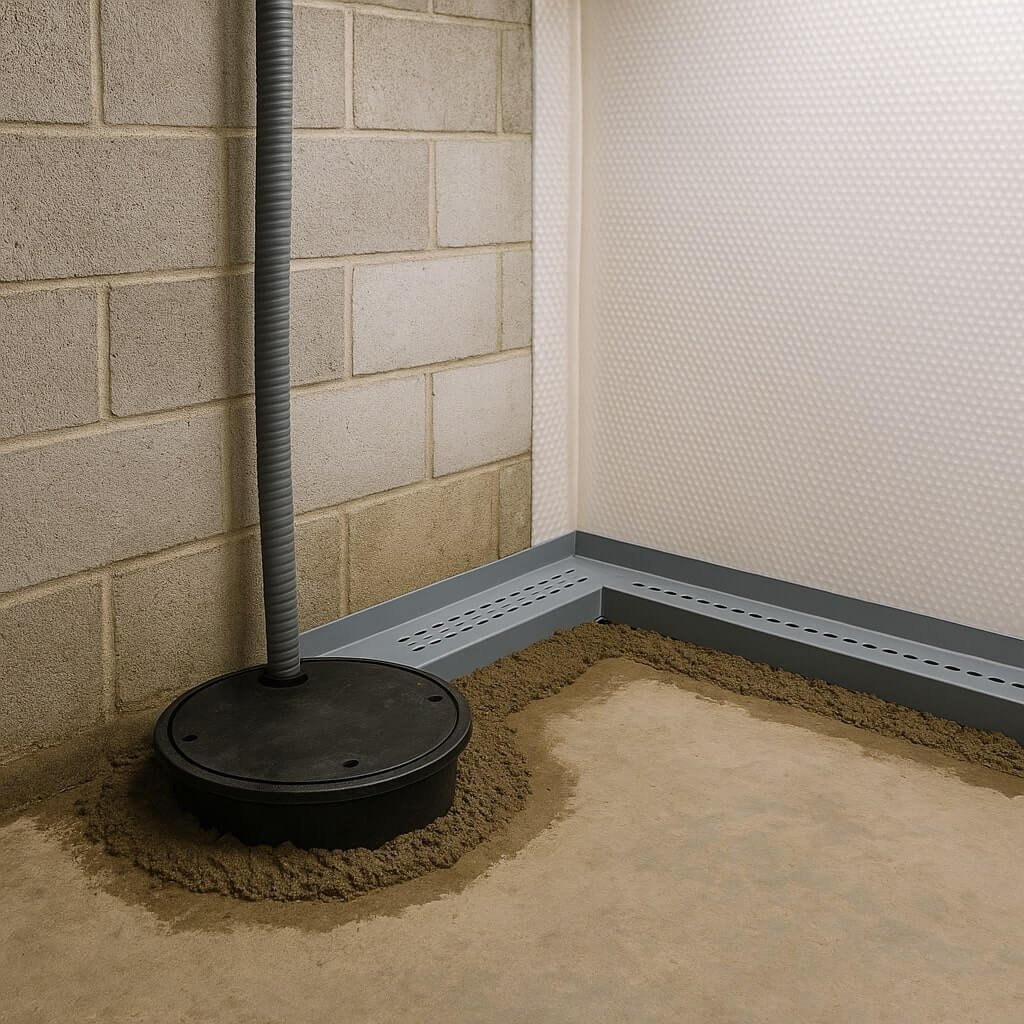
- Drainage systems: Proper drainage is vital for redirecting water away from your foundation.
- Sealants: Use high-quality sealants to fill cracks and gaps, preventing water seepage.
Improve Drainage Around Your Home
To effectively prevent water from pooling around your foundation, focus on improving the drainage around your home.
Start by implementing drainage solutions like French drains or downspout extensions to redirect water away. Additionally, you can use landscaping techniques to grade your yard, ensuring it slopes away from the foundation.
Implement drainage solutions like French drains and grade your yard to redirect water away from your foundation.
Planting absorbent vegetation and incorporating rain gardens can also enhance drainage and reduce runoff.
Regularly inspect gutters and drains for clogs, as keeping them clear is essential.
Seal Cracks and Gaps Effectively
Improving drainage around your home is just one piece of the puzzle in basement waterproofing.
To effectively seal cracks and gaps, follow these steps:
- Identify Cracks: Inspect walls, floors, and foundation for visible cracks.
- Use Crack Sealing Products: Choose appropriate materials, like epoxy or polyurethane, to fill in the cracks securely.
- Gap Filling: Apply foam or caulk for any gaps around windows, doors, or pipes.
Consider Professional Waterproofing Services
While DIY methods can be effective, there are times when considering professional waterproofing services is a wise choice.
If you’re facing persistent moisture issues or extensive water damage, expert consultation can help identify the root causes and the best waterproofing techniques for your situation.
Professionals have access to advanced tools and materials that can offer long-lasting solutions beyond typical DIY efforts. They can also assess your property’s unique needs, ensuring a thorough approach to waterproofing.
Ultimately, investing in professional services can save you time, money, and stress in the long run, protecting your home from future water-related problems.
Conclusion
By following these expert tips for basement waterproofing, you can effectively protect your home from moisture damage. Start by evaluating vulnerabilities and investing in quality materials, while also improving drainage around your property. Don’t forget to seal cracks and gaps to enhance your defenses. If problems persist, consider reaching out to professional waterproofing services for tailored solutions. Taking these steps will help you maintain a dry, safe, and healthy basement for years to come.